

Non-Ordinary States of Consciousness
Rare, blissful moments in our lives where everything seems connected and just as it should be may emerge spontaneously. These transcendent moments of highest happiness and fulfillment, occasionally interpreted as religious experiences, are referred to as “peak experiences” in psychology.
Psychologist Abraham Maslow, who coined the term, described peak experiences as a "rare, exciting, oceanic, deeply moving, exhilarating, elevating experiences that generate an advanced form of perceiving reality, and are even mystic and magical in their effect upon the experimenter." Peak experiences can lead to increased personal awareness and can serve as a turning point in one's life. The moments themselves can even lend meaning to life. Maslow wrote, “Peak-experiences can make life worthwhile by their occasional occurrence.” They may also allow us to uncover meaning through a shift in perspective.
My first peak experience occurred in Big Bend National Park. I had been hiking alone and encountered an older couple. The couple was deciding whether to turn around or continue up the steep path. I helped them figure out where we were on the map and encouraged them to keep going. After reaching my destination, a literal peak, I climbed on top of a big rock to take in the view.
A short while later, I overheard the couple below me, out of sight. They said, “Where’s that little angel?” I realized they were talking about me. Overlooking a vast expanse of desert wilderness, endorphins from the physical exertion coursing through my veins, I thought to myself, “I am an angel because THIS is heaven.” I felt as if everything was glorious and exactly as it should be including myself, a small but integral part of this larger landscape and the world.
Can you force a peak experience to happen? Unfortunately, no. Peak experiences are relatively uncommon, though in my experience they are more likely to occur spontaneously during travel. I have, however, been quite successful in creating the conditions for another powerful yet more common non ordinary state of consciousness, awe.
Dacher Keltner, Ph.D, author of Awe: The New Science of Everyday Wonder and How It Can Transform Your Life, defines awe as “being in the presence of something vast and mysterious that transcends your current understanding of the world.” A moment does not have to rise to the level of being a “peak” experience for it to be beneficial and possibly transformative. Experiences of awe are linked to lower depressive symptoms, greater life satisfaction, improved physical health, and a quieter inner critic.
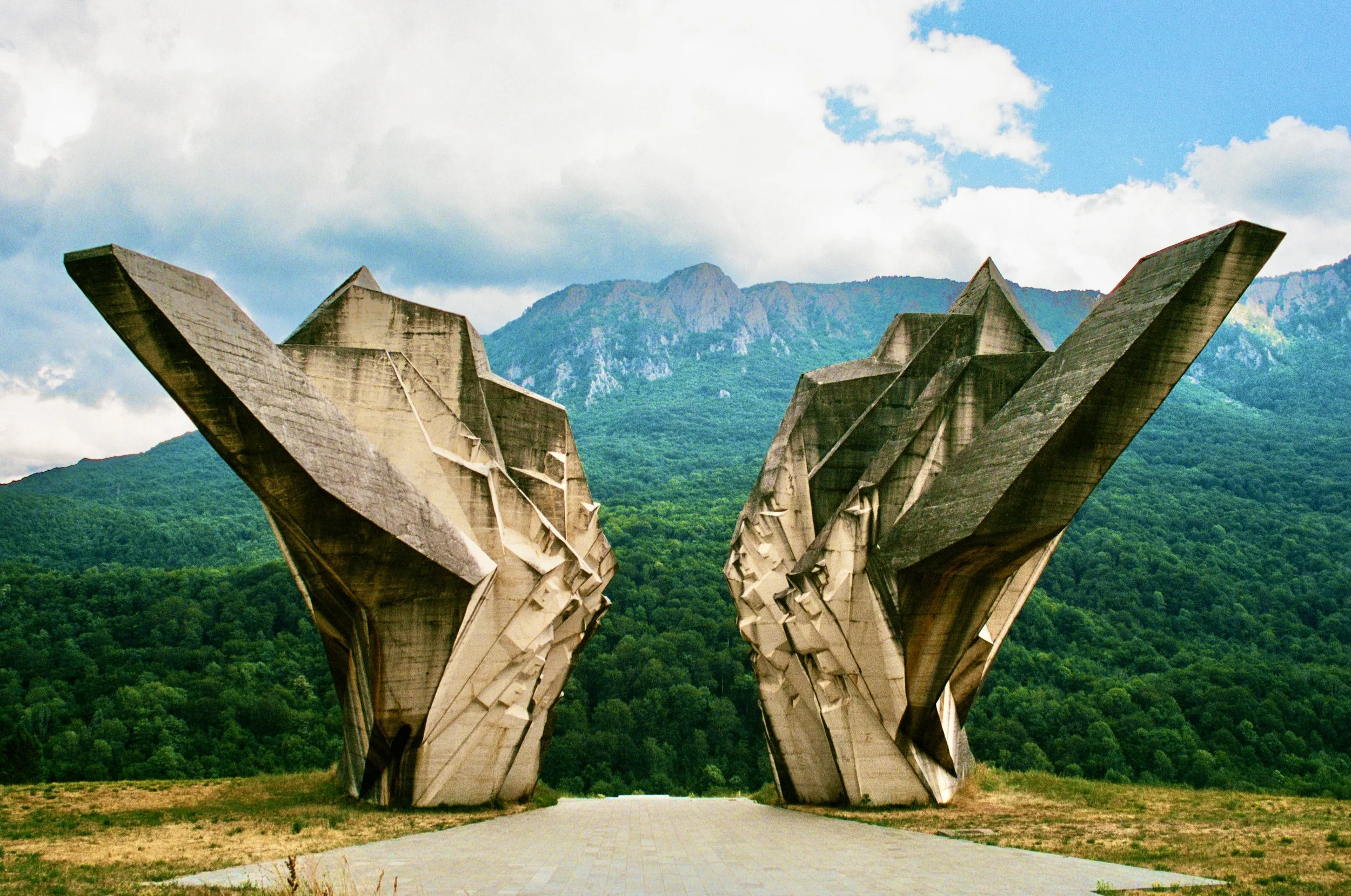
When I visited Croatia last summer I wasn’t looking forward to the beaches, I was more excited for the brutalist and modernist monuments. These "spomeniks" (the Serbo-Croatian word for monument) scattered over the former Yugoslavia were built to honor its people's resistance against the genocide fascist WWII Axis powers orchestrated against the ethnic Serbs, Jewish and Roma people and to celebrate the subsequent socialist revolution.
I visited three spomeniks in the former Yugoslavia: The Battle of Sutjeska Memorial Monument Complex in the Valley of Heroes, Monument to the Revolution of the People of Moslavina, Monument to the Uprising of the people of Banija and Kordun. So why did I drive several hours out of my way through the middle of nowhere in Croatia and Bosnia and Herzegovina to visit these largely abandoned structures built by a government that no longer exists? Because I like to facilitate awe in my travels.
Scientists suggest that awe requires two factors:
Perceived Vastness–Vastness refers to anything that is perceived to be much larger than the self or the self’s ordinary scope of experience, like the Grand Canyon, the night sky, the complexity in an intricate work of art, the speed at which a small child develops, or the mysteries of life and death.
Need for Accommodation–An experience must be so outside one’s experience that their understanding of the world must shift, expand, or evolve to accommodate what is perceived.
Moral beauty, that is appreciating exceptional virtue, character, kindness, strength, and courage in others, is the most common source of awe. Other elicitors of awe include nature, spiritual or religious experiences, art, and collective effervescence, i.e. the experience of moving in unison in dance, song, ritual, etc.
Everything about these monuments--from their impressively large scale to their remote locations to the people they honor, now long gone from this world--seem vast and mysterious. The names of the spomeniks themselves--referring to revolution, uprising, and heroes--evoke awe in response to moral beauty, courage, and sacrifice.
With rising fascism in the US and genocide abroad, these awe inspiring spomeniks offered me a welcome and fresh perspective. While visiting the monument above, the dark clouds ruptured and I ran back to my car to avoid getting drenched by the summer rain. Giggly with endorphins from the unexpected sprint, I felt hope. Regimes topple, governments evolve, even concrete crumbles but moral beauty persists.
Have you had a peak experience? If you’ve had more than one, were there common themes or similar characteristics of the situation?